

A 36W portable solar panel for iPhone 18 Pro can be a useful way to keep your phone powered when a wall outlet is nowhere nearby.
But solar charging works differently from plugging an iPhone into a wall charger.
A solar panel does not produce exactly the same amount of power throughout the day. Sunlight intensity, panel angle, clouds, partial shade, temperature, cable condition and the connected device can all change the amount of usable power reaching your phone.
That means a portable solar charger should not be treated as a fixed-speed replacement for a wall charger.
It is better viewed as an outdoor energy source that can extend the time you stay away from outlets during hiking, backpacking, camping, road trips and long outdoor days.

For the best results, fully unfold the solar panel, place it in unobstructed sunlight and adjust its position as the sun moves.
Can a 36W Solar Panel Charge an iPhone 18 Pro?
Yes, a compatible USB-C solar charger can provide power to an iPhone 18 Pro or iPhone 18 Pro Max.
The iFORWAY 36W Portable Solar Panel Charger includes a USB-C charging output and is designed for smartphones, tablets, power banks and other small USB-powered devices. Its rated solar-panel output is 36W. (iForway)
However, 36W rated solar power does not mean your iPhone continuously receives 36W.
The number printed on a solar panel describes its maximum rated output under specified conditions.
Real outdoor output can be lower because of:
-
Changing sunlight
-
Clouds or haze
-
Panel angle
-
Partial shade
-
High panel temperature
-
Cable losses
-
Device charging behavior
-
USB-C power negotiation
The product page itself notes that actual output depends on sunlight intensity, angle and weather conditions. (iForway)
So the more useful question is not:
“Will my iPhone always charge at 36W?”
It is:
“How can I get the most stable usable power from a 36W solar panel outdoors?”
36W Solar Charging Is Different From Apple's Maximum Fast Charging
Apple says the iPhone 18 Pro can reach approximately 50% charge in around 15 minutes under its specified wired fast-charge test conditions.
Those conditions use a 60W-capable USB-C cable and USB PD 3.1 or later power adapter with Adjustable Voltage Supply, or AVS. Apple also makes clear that actual charge time varies with the adapter, settings, usage and environmental conditions. (Apple)
That is important when comparing solar charging with wall charging.
The iFORWAY panel has a 36W rated solar output, and its current product page does not state that its USB-C output supports Apple's required AVS charging profile.
Therefore, you should not claim that the panel will reproduce Apple's approximately 15-minute 50% fast-charge result.
That does not make solar charging ineffective.
It simply means the purpose is different.
A wall charger is designed to provide stable power from the electrical grid.
A portable solar panel is designed to turn available sunlight into useful charging power when the grid is unavailable.
What the iFORWAY 36W Solar Panel Offers
The iFORWAY model is designed as a compact outdoor solar charger rather than a large solar-generator panel.
Its current published specifications include:
| Feature | iFORWAY 36W Solar Charger |
|---|---|
| Rated power | 36W |
| Rated voltage | 13.2V ±5% |
| Rated current | 2.7A ±5% |
| Solar conversion efficiency | Up to 23% |
| Output conversion efficiency | >90% under rated conditions |
| Charging connection | USB-C |
| Waterproof rating | IP67 |
| Structure | Four-section foldable design |
| Primary use | Phones, tablets, power banks and small USB devices |
The product page specifically positions it for backpacking and outdoor use, with the ability to lay it out, carry it folded or attach it to a backpack. (iForway)
What Does 23% Solar Efficiency Actually Mean?
This figure is easy to misunderstand.
A 23% solar conversion efficiency rating does not mean your phone receives only 23% of the panel's stated 36W power.
Instead, solar-cell efficiency describes how effectively the photovoltaic cells convert incoming sunlight into electrical energy under test conditions.
The panel itself is rated up to 36W, while its monocrystalline solar cells are listed at up to 23% conversion efficiency. (iForway)
For buyers, the practical takeaway is simpler:
A higher-efficiency panel can produce more usable electrical power from a given surface area than a less efficient panel under comparable conditions.
That matters for backpacking panels because physical size and weight are limited.
Why Solar Output Changes During the Day
Unlike a wall outlet, sunlight is constantly changing.
A panel that performs well at midday may produce noticeably less energy early in the morning, late in the afternoon or when clouds pass overhead.
Sun intensity
Strong direct sunlight generally produces the best results.
Thin clouds, haze and overcast conditions reduce the amount of solar energy reaching the panel.
Panel angle
Solar panels perform best when the surface receives strong direct sunlight.
If the panel lies at an unfavorable angle relative to the sun, usable power falls even if the day looks bright.
Partial shade
Shade can have a surprisingly large effect.
A tree branch, backpack strap, bottle or even another section of gear covering part of the panel can reduce performance.
Keep all four solar sections as unobstructed as possible.
Temperature
Bright sun is necessary for solar charging, but excessive heat is not ideal for electronics.
This creates an important outdoor setup rule:
Put the solar panel in the sun. Keep the iPhone in the shade.
Keep Your iPhone Out of Direct Sunlight
Your solar panel needs direct sunlight.
Your iPhone does not.
Do not place the phone directly on top of the solar panel or leave both devices exposed to intense sunlight for long periods simply because they are connected.
High device temperature can cause an iPhone to reduce charging performance or temporarily alter charging behavior.
A better setup is:
Solar panel: clear direct sunlight
Phone: ventilated shade
Cable: between them without excessive tension
For example, you can position the solar panel outside your tent while keeping the phone just inside the shaded entrance.
At a picnic table, the panel can remain in direct sunlight while the phone stays underneath the table edge or inside a ventilated bag pocket.
How to Position a Portable Solar Panel for Better Charging
Start by opening the four solar sections completely.
Avoid leaving one section partially folded.
Then place the panel where no trees, tents, vehicles or gear cast shadows across its surface.
As the sun moves, reposition the panel periodically.
For stationary charging:
-
Fully unfold all four sections.
-
Face the panel toward the strongest sunlight.
-
Keep all cells free of shade.
-
Keep the USB-C connection secure.
-
Place the phone in a cooler shaded location.
-
Recheck the panel position as sunlight changes.
This will generally give you a more predictable result than simply leaving the panel wherever it was first placed.

A stable, tested USB-C connection and unobstructed sunlight are more important than trying to position the phone next to the panel.
Lay It Flat or Hang It From a Backpack?
The iFORWAY panel can also be attached to a backpack, which makes it easier to collect solar energy while hiking. The product page specifically presents backpack attachment as one of its outdoor use modes. (iForway)
But there is a tradeoff.
Backpack mounting
Best for:
-
Hiking
-
Trekking
-
Moving between camps
-
Opportunistic solar collection
The disadvantage is that the panel continuously changes orientation as you move.
Trees, your body and surrounding terrain can also create intermittent shade.
Stationary setup
Best for:
-
Campsites
-
Lunch breaks
-
Picnic areas
-
Base camps
-
Long stops
When you stop for an extended period, laying or hanging the panel where you can deliberately orient it toward the sun will usually give you more control over charging conditions.
In other words:
Backpack mounting is about convenience. Proper stationary placement is about maximizing available solar energy.
Should You Charge the iPhone Directly From the Solar Panel?
You can use a compatible USB-C connection to charge a phone directly from the panel.
For stable sunny conditions, this is a straightforward setup:
Sun → Solar Panel → USB-C → iPhone
However, direct phone charging is not always the most flexible way to use outdoor solar.
Clouds, shade and movement can cause solar output to fluctuate.
That is why a second strategy can be useful:
Sun → Solar Panel → Power Bank → iPhone
The power bank acts as an energy buffer.
You can collect solar power when conditions are good and use the stored energy later when:
-
The sun goes down
-
You move into shade
-
You enter a tent
-
You need the phone while walking
-
Weather conditions change
-
You want to charge overnight
The iFORWAY product page specifically lists both smartphones and power banks among the devices that can be charged through its USB-C connection. (iForway)
Direct Solar Charging vs. Using a Power Bank
| Setup | Best for | Main advantage |
|---|---|---|
| Panel → iPhone | Strong, stable sunlight | Simple setup |
| Panel → Power Bank | Long outdoor days | Stores energy for later |
| Power Bank → iPhone | Night or poor sunlight | Stable stored power |
For a short afternoon outdoors, direct charging may be enough.
For backpacking or an extended outdoor day, combining the solar panel with a power bank provides more flexibility.
What Happens When a Cloud Passes Over?
Solar output can fall quickly when sunlight changes.
Whether the phone continues charging normally depends on available output and how the devices handle the change.
This is another reason you should not advertise a fixed solar charging time.
A charging test conducted under bright midday sun may produce a very different result from:
-
Light cloud
-
Heavy cloud
-
Tree cover
-
Morning sunlight
-
Late-afternoon sunlight
If you need dependable stored power rather than opportunistic charging, use the panel to replenish a compatible power bank whenever sunlight is strong.
Can the 36W Panel Charge an iPhone 18 Pro Max?
Yes, the same basic USB-C solar-charging principles apply to iPhone 18 Pro Max.
However, the larger phone's real charging time still depends on the available solar power, battery level, temperature and device usage.
Do not assume that a panel's wattage translates directly into a fixed charging time for either model.
Can You Use the Phone While Solar Charging?
Yes, but what you do with the phone matters.
Using GPS navigation, streaming video, recording high-resolution video, gaming or running other demanding tasks consumes energy while the phone is simultaneously charging.
In weak sunlight, the phone's own power consumption can significantly reduce the net battery gain.
For faster practical recovery outdoors:
-
Lock the screen when possible.
-
Reduce unnecessary high-power activity.
-
Avoid excessive heat.
-
Place the phone in good cellular coverage when possible.
-
Let the phone charge undisturbed during longer stops.
This becomes especially useful on hiking or travel days when the objective is to preserve enough battery for navigation, emergency communication and photography.
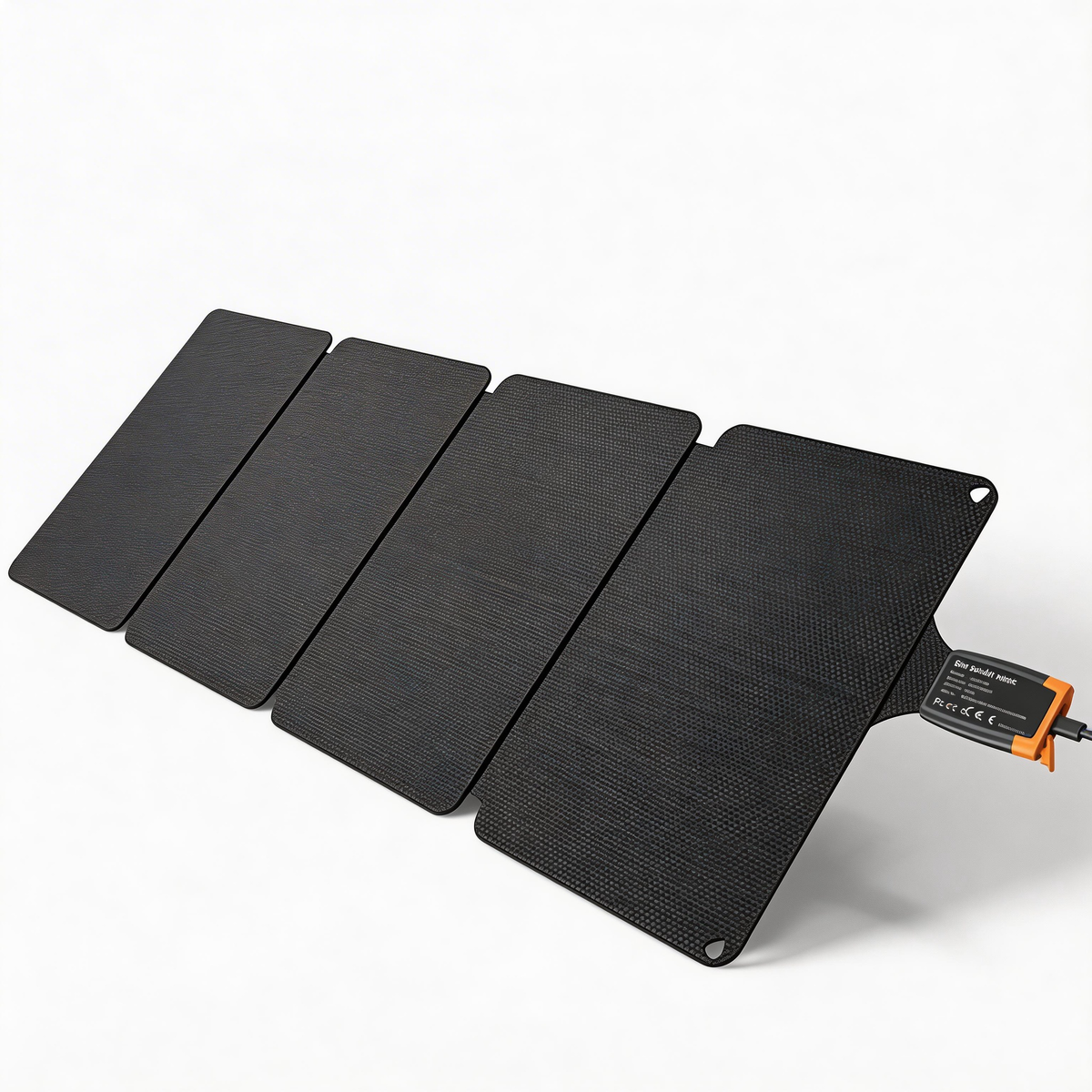
iFORWAY 36W Backpacking Solar Charger
At only 2.35 lb, this foldable USB-C solar charger is built to keep phones, power banks and everyday essentials powered when you're away from an outlet.
Is IP67 Useful for an Outdoor Solar Charger?
Yes.
The iFORWAY panel is listed with IP67 dustproof and waterproof protection, making the main panel better suited to outdoor environments where dirt and moisture are possible. (iForway)
However, IP ratings should not be interpreted as permission to ignore exposed electrical connections.
If the USB-C port or cable connection is open or actively connected, keep the connector area as dry and clean as reasonably possible.
Do not deliberately charge electronics through wet connectors.
After exposure to moisture, inspect and dry the connection before plugging in your phone.
Think of IP67 as useful environmental protection—not a reason to charge carelessly in heavy rain.
Keep Dirt Away From the USB-C Port
Backpacking introduces another problem that indoor chargers rarely face:
dust, sand and debris.
Before connecting your phone:
-
Check the USB-C port.
-
Check the cable plug.
-
Remove visible dirt.
-
Avoid pulling the cable sideways.
-
Do not leave the connector lying directly in sand or wet grass.
Small preventative steps can protect both the solar charger and the phone's USB-C port.
Where a 36W Backpacking Solar Charger Makes Sense
A compact solar panel is most useful when access to wall power is limited but carrying a large power station would be unnecessary.
Typical situations include:
Hiking
Keep navigation and emergency communication devices supplied during long outdoor days.
Backpacking
Collect additional energy during stops or while the panel is attached to your pack.
Camping
Place the panel in direct sunlight during the day and charge phones, power banks and small electronics.
Parks and picnics
Use sunlight to top up devices without searching for an outdoor outlet.
Road trips
Keep the panel available as another charging option during extended stops away from mains power.
Photography and content creation
Help maintain phones, small cameras and compatible USB-powered accessories during outdoor shoots.
Emergency preparedness
A portable solar charger can provide another source of small-device power when electrical outlets are unavailable.
It is best treated as part of a broader preparedness system rather than as your only source of energy.
What a 36W Solar Panel Is Not Designed For
The iFORWAY product page positions the panel primarily for small USB-powered electronics rather than large electrical loads. (iForway)
It is a good match for devices such as:
-
Smartphones
-
Tablets
-
Earbuds
-
Small cameras
-
Power banks
-
Other compatible USB-powered devices
It should not be confused with the much larger solar panels used for high-capacity portable power stations, RV systems or household backup batteries.
That distinction is useful when choosing a solar product.
A backpacking solar charger prioritizes portability and access to USB power.
A large solar generator panel prioritizes higher energy production.
How to Prepare Before a Hiking or Camping Trip
Do not make your first solar-charging test at the trailhead.
Before leaving:
-
Unfold the panel at home or in a sunny outdoor area.
-
Inspect all four solar sections.
-
Check the USB-C port.
-
Test your intended cable.
-
Connect the phone.
-
Test any power bank you intend to carry.
-
Learn how you want to attach or position the panel.
-
Fully charge your phone and backup battery before departure.
Solar should extend your available energy—not replace sensible pre-trip preparation.
iPhone 18 Pro Solar Charging FAQ
Can a 36W solar panel charge an iPhone 18 Pro?
Yes. A compatible USB-C solar panel such as the iFORWAY 36W model is designed to provide power to smartphones. Actual charging speed varies with available sunlight, panel orientation, temperature and the connected device. (iForway)
Will my iPhone receive 36W continuously?
No.
36W is the panel's rated maximum power. Real USB-C output varies with sunlight and other conditions.
Can the iFORWAY solar panel achieve Apple's 15-minute 50% fast charge?
Do not assume so.
Apple's benchmark uses specified USB PD 3.1 or later AVS equipment, while the iFORWAY panel is rated at 36W and its current product specifications do not explicitly state AVS support. (Apple)
Does the panel have USB-A?
The current iFORWAY 36W solar charger uses a USB-C charging port. Use the current product specifications when selecting a cable. (iForway)
How many sections does the solar panel have?
The iFORWAY model uses a compact four-section foldable design, allowing it to be opened for charging and folded for transport.
What does 23% efficiency mean?
It refers to the solar cells' ability to convert incoming sunlight into electrical energy. It does not mean the phone receives only 23% of 36W.
Will the panel always reach 36W?
No.
Actual power depends on sunlight intensity, panel angle, weather and other real-world conditions. The product page explicitly notes that outdoor output varies. (iForway)
Will it charge on a cloudy day?
Solar panels can still generate some power under certain cloudy conditions, but output is normally lower and less predictable than in strong direct sunlight.
Do not depend on a fixed charging speed in poor weather.
Does shade matter?
Yes.
Keep all four solar sections as clear of shade as possible for better performance.
Should I place my iPhone on top of the solar panel?
No.
The panel should receive direct sunlight, while the iPhone should ideally stay in a cooler, ventilated shaded location.
Is it better to charge my phone or a power bank?
Both can be useful.
Direct phone charging is simple in stable sunlight. Charging a power bank allows you to store energy and use it later when sunlight is unavailable.
Can I attach the solar charger to a backpack?
Yes. The product is designed to support backpack attachment for portable outdoor use. (iForway)
For maximum charging consistency, however, a stationary panel positioned deliberately toward strong sunlight can be easier to optimize.
Can I leave it outside in rain?
The panel is rated IP67, but exposed USB-C connectors should still be kept clean and dry. Avoid charging electronics through wet connectors.
What devices can the iFORWAY 36W solar charger power?
The product page lists smartphones, power banks, tablets and other small USB-powered electronics as intended use cases. (iForway)
Is 36W enough for backpacking?
For phone, power-bank and other small USB-device charging, a 36W folding panel provides a balance between portable size and useful rated solar output.
For much larger power requirements, a higher-capacity solar and battery system may be more appropriate.
Final Thoughts: Use Solar as Part of Your Outdoor Charging Plan
The best way to think about a portable solar panel for iPhone 18 Pro is not as a 36W wall charger powered by sunlight.
Outdoor solar is variable.
Its real strength is giving you access to energy when the wall outlet disappears.
For better results:
fully unfold the four panels, keep them in direct sunlight, minimize shade, use a reliable USB-C connection and keep your iPhone cool.
For a short stop, you can charge the phone directly.
For longer trips, combining a solar charger with a compatible power bank gives you a way to collect energy during the day and use it later.
The iFORWAY 36W Portable Solar Panel Charger combines a 36W rated output, up to 23% solar-cell efficiency, USB-C charging, IP67 outdoor protection and a compact foldable backpacking design for phones, power banks and other small devices. (iForway)
Check current specifications and availability before building your next outdoor charging kit.
0 comments