

For hikers, campers, and multi-day trekkers, the real problem is often not losing signal—it is running out of power first. Your phone may be needed for offline maps and weather updates, your GPS tracks your route, your headlamp matters after dark, and even your power bank eventually needs to be recharged.
A 36W Portable Solar Panel Charger usually refers to a foldable solar panel with a maximum rated output of around 36 watts. It is designed to help recharge smaller devices when there is no wall outlet, vehicle power source, or campground electricity available.
Backpackers care about it because it sits in a practical middle ground between lightweight portability and useful charging capability. Lower-wattage panels are often lighter, but they may have limited charging speed and less output headroom. Larger solar panels can provide more power, but they also tend to be heavier, bulkier, and harder to pack. That makes a 36W portable solar charger a popular middle option, especially for hiking trips, camping weekends, and lightweight travel lasting more than two days.
Its role is also clear: it is not meant to recreate a home wall outlet in the wilderness. Instead, it helps keep essential gear alive. Common uses include charging phones, satellite communicators, action cameras, headlamps, e-readers, and power banks. Many models include USB-A or USB-C ports, allowing you to set them up during breaks or hang them from your backpack for gradual charging throughout the day.
One important thing to understand is that 36W is an ideal-condition rating. It does not mean the panel will deliver 36 watts consistently in real outdoor conditions. Clouds, tree cover, sun angle, temperature, panel direction, and dust on the surface can all noticeably reduce output.
That is why the most important question is not simply whether the panel says “36W.” What matters is whether it can provide reliable charging opportunities on your actual route.
For people who do not want to carry several large battery packs, a portable solar panel can help keep navigation, communication, and lighting available while reducing battery anxiety. Many first-time users assume they can quickly charge a phone while hiking. In reality, a more effective approach is usually to recharge a power bank during the day, then use the power bank to charge devices steadily at night.
That is one of the main reasons a 36W Portable Solar Panel Charger continues to appeal to backpackers.
Is 36W Enough? Choosing Between 20W, 36W, and 60W+ Solar Chargers
If your goal is to keep a phone, GPS device, headlamp, camera batteries, and a power bank running, 36W is usually enough—as long as you understand that it is designed for steady energy recovery rather than instant fast charging.
The value of a 36W portable solar charger is that it fits into a practical middle range. It offers more charging headroom than a 20W panel while remaining easier to carry than most 60W or larger solar panels. That balance often works especially well for real hiking and backpacking conditions.
Start with 20W solar chargers. Their main advantages are low weight, compact size, and easy backpack attachment. They are a good fit for day hikes, weekend camping near town, or trips where you only need to charge a phone and a small headlamp. If you can return to a cabin, car, campground outlet, or hotel each night, a 20W panel may be more than enough.
However, once your trip extends beyond two days—or you need to recharge a larger power bank—a 20W solar charger can start to feel limited. It may struggle more in partial shade, angled sunlight, or shorter afternoon daylight windows.
Now consider 60W and larger solar chargers. Higher wattage can provide more useful charging power, especially for shared use, longer stays at a fixed campsite, multiple devices, or larger battery systems. The tradeoff is size. Bigger panels usually mean more weight, larger folded dimensions, and more surface area to manage.
For backpackers, that does not just mean larger numbers on a spec sheet. It can mean more difficult packing, less stable backpack mounting, more wind resistance, and a greater chance of snagging branches while moving through trails.
A 36W Portable Solar Panel Charger is often considered the sweet spot because it can still maintain a relatively packable folded size while offering more reliable charging potential for power banks, phones, and navigation devices on sunny days. It may not eliminate the need for backup batteries, but it can often reduce the number of extra batteries you need to carry.
A simple way to choose is:
-
For short, lightweight trips with few devices, a 20W solar charger is often the better value.
-
For solo or two-person backpacking trips lasting two to four days, 36W is usually the most balanced choice.
-
For basecamp camping, shared charging, and larger device loads, consider 60W or more.
If your route prioritizes mobility and you do not want to rely entirely on several power banks, a 36W solar charger is often enough without becoming excessive.

Key Features to Understand: Solar Efficiency, Ports, Water Resistance, and Portability
When choosing a 36W portable solar panel charger, many people focus only on the “36W” rating. But in real use, solar conversion efficiency, port selection, weather resistance, and portability often matter more than the rated wattage itself.
For backpackers, specifications only matter when they translate into reliable charging, easy packing, and less hassle on the trail.
First, consider solar conversion efficiency. This refers to how effectively the solar panel turns sunlight into usable electricity. Higher efficiency generally means the panel has a better chance of producing more power from a similar surface area.
That matters for foldable solar panels because backpackers are naturally limited in how much panel area they are willing to carry. However, efficiency should never be viewed separately from real conditions. Poor sun angle, cloudy weather, forest shade, panel overheating, and poor positioning can all reduce actual performance.
Think of higher efficiency as a way to reduce losses under good conditions—not as a guarantee of full output.
The second key factor is ports and charging stability. Many solar chargers include USB-A ports, while some also offer USB-C output. USB-A works with many common charging cables, while USB-C is more convenient for newer phones, camera accessories, and certain power banks.
Keep in mind that total rated output and single-port output are not always the same. When multiple devices are connected, the charging speed of each port may drop.
Another often-overlooked issue is how well the charger handles changing sunlight. If passing clouds or shifting shadows cause the output to fluctuate, some devices may repeatedly disconnect and reconnect. In outdoor use, slow but stable charging is often more useful than a brief peak charging speed.
The third factor is water resistance. Many portable solar chargers are advertised as splash-resistant, but that does not necessarily mean the entire unit can be safely left in heavy rain. Pay attention to the panel surface, stitching, junction box, connectors, cable ends, and storage pockets.
A practical standard is whether the panel can handle dew, light rain, dust, and mud—not whether the marketing claims sound impressive.
Finally, look at portability. Do not focus only on weight. Also consider folded size, unfolded footprint, mounting points, thickness, and storage design. A panel may be lightweight but still annoying to carry if it folds too wide, swings around on your backpack, or takes up too much space when opened.
When comparing options, prioritize these four things:
-
Can it reliably recharge a power bank on sunny days?
-
Do the ports match your main devices?
-
Is it durable enough for moisture and dust?
-
Is it easy to pack, carry, and mount?
Looking at all of these factors together gives you a much more realistic picture than focusing only on the “36W solar charger” label.
Real-World Tips, Common Mistakes, and Buying Advice for a 36W Portable Solar Panel Charger
Using a 36W portable solar charger effectively is less about following a manual and more about building good habits.
The first rule is to aim the panel toward direct sunlight rather than placing it flat without thinking about orientation. Output is usually strongest around midday, and the more directly the panel faces the sun, the more stable the charging performance tends to be.
During breaks, place the panel in an open area without shade whenever possible. This is usually more effective than leaving it mounted on the back of your backpack all day, because hiking causes constant changes in direction, body shadows, tree cover, and sun angle.
The second recommendation is to charge a power bank first, then use the power bank to charge your phone, GPS device, headlamp, or other electronics. This approach is generally more stable.
Many devices can react poorly when sunlight changes quickly. They may repeatedly enter and exit charging mode as output rises and falls. A power bank is usually better at absorbing those fluctuations. For backpackers, storing energy during the day and distributing it at night is often much easier than directly charging a phone from the solar panel.
What should you expect on cloudy days? Think of it as an opportunity to gain some extra power—not as a situation where normal charging speed is guaranteed. A 36W portable solar charger may still produce output under light clouds, weak sunlight, or partial shade, but you should not build your whole power plan around dependable charging in poor conditions.
The safest approach is to treat solar power as a sunny-day advantage rather than your only power source.
Another useful point: do not rely too heavily on charging while walking. Backpack-mounted charging looks convenient, but body movement, changing direction, tree shade, and inconsistent panel angle can cause unstable output. If you want better performance, it is usually more effective to fully unfold the panel during lunch breaks, photo stops, rest periods, or while setting up camp.
There are three common mistakes:
First, assuming that 36W means a constant 36W output. In reality, rated wattage and real-world output are often very different.
Second, assuming that hanging a panel on your backpack automatically means efficient charging. While moving, it is more of a bonus charging method than a high-efficiency setup.
Third, assuming that water resistance means you can leave the panel exposed to rain and harsh conditions without concern. Ports, cables, and junction boxes still need basic protection.
A few simple habits can make the experience better:
-
Prepare your cables and charging setup before the trip.
-
Wipe dust or dirt off the panel surface when needed.
-
At camp, place the panel on open ground, a rock, or another unobstructed surface.
-
Do not overestimate charging speed—leave room in your plan for changing weather.
The buying conclusion is straightforward. If most of your trips are short day hikes or you have access to an outlet every night, a 36W solar charger may be more than you need.
But if you take two- to four-day lightweight backpacking trips, carry a phone, GPS device, headlamp, and power bank, and want to reduce the amount of backup battery capacity you carry, a 36W Portable Solar Panel Charger is often a very practical balance.
It is not ideal for people expecting wall-charger-level speed. But for backpackers willing to trade a little time for more energy flexibility, a 36W solar charger can be well worth bringing—just keep your expectations realistic.
FAQ: iFORWAY Backpacking Solar Charger
Is the iFORWAY Backpacking Solar Charger good for hiking and camping?
Yes. The iFORWAY Backpacking Solar Charger is designed for outdoor use, including hiking, camping, backpacking trips, road trips, and emergency backup power. It can help recharge phones, GPS devices, headlamps, cameras, and power banks when wall outlets are unavailable.
Can I use this outdoor Backpacking Solar Charger to charge my phone?
Yes. An outdoor Backpacking Solar Charger can charge most USB-C and USB-A devices, including smartphones, wireless earbuds, action cameras, GPS units, and small rechargeable lights. For more stable charging, especially when sunlight changes, it is often better to charge a power bank first and then charge your phone from the power bank.
Is the iFORWAY Backpacking Solar Charger suitable for multi-day backpacking trips?
Yes. The iFORWAY Backpacking Solar Charger is a practical option for backpackers on two- to four-day outdoor trips. It helps provide extra charging flexibility for essential devices such as phones, navigation tools, headlamps, satellite communicators, and portable power banks.
Can I hang a Backpacking Solar Charger on my backpack while walking?
Yes, many backpacking solar chargers can be attached to the outside of a backpack for gradual charging while hiking. However, the best charging performance usually comes from placing the panel in direct sunlight during breaks, lunch stops, or at camp. A backpack-mounted solar charger is useful for supplemental power, but it may not provide consistent maximum output while moving.
Does a 36W Backpacking Solar Charger work on cloudy days?
A 36W Backpacking Solar Charger may still generate some power on cloudy days, but charging speed will be lower than in direct sunlight. For reliable outdoor power planning, treat solar charging as a way to extend battery life rather than your only source of electricity.
What devices can I charge with the iFORWAY outdoor solar charger?
The iFORWAY outdoor Backpacking Solar Charger can support compatible USB-powered devices, such as smartphones, tablets, cameras, GPS devices, headlamps, Bluetooth speakers, wireless earbuds, and portable power banks. Always check your device's charging requirements and use compatible cables.
Is a portable solar charger better than carrying extra power banks?
They work best together. A high-capacity power bank gives you dependable stored energy, while a portable Backpacking Solar Charger helps replenish that power during long outdoor trips. For backpackers, carrying both can provide more flexibility than relying on either option alone.
Is the iFORWAY Backpacking Solar Charger waterproof?
The solar panel is built for outdoor conditions and can help handle light rain, moisture, dust, and splashes. However, the USB ports, cables, connectors, and charging devices should still be protected from heavy rain and standing water.
What Is a 36W Portable Solar Panel Charger, and Why Do Backpackers Care?
For hikers, campers, and multi-day trekkers, the real problem is often not losing signal—it is running out of power first. Your phone may be needed for offline maps and weather updates, your GPS tracks your route, your headlamp matters after dark, and even your power bank eventually needs to be recharged.
A 36W Portable Solar Panel Charger usually refers to a foldable solar panel with a maximum rated output of around 36 watts. It is designed to help recharge smaller devices when there is no wall outlet, vehicle power source, or campground electricity available.
Backpackers care about it because it sits in a practical middle ground between lightweight portability and useful charging capability. Lower-wattage panels are often lighter, but they may have limited charging speed and less output headroom. Larger solar panels can provide more power, but they also tend to be heavier, bulkier, and harder to pack. That makes a 36W portable solar charger a popular middle option, especially for hiking trips, camping weekends, and lightweight travel lasting more than two days.
Its role is also clear: it is not meant to recreate a home wall outlet in the wilderness. Instead, it helps keep essential gear alive. Common uses include charging phones, satellite communicators, action cameras, headlamps, e-readers, and power banks. Many models include USB-A or USB-C ports, allowing you to set them up during breaks or hang them from your backpack for gradual charging throughout the day.
One important thing to understand is that 36W is an ideal-condition rating. It does not mean the panel will deliver 36 watts consistently in real outdoor conditions. Clouds, tree cover, sun angle, temperature, panel direction, and dust on the surface can all noticeably reduce output. That is why the most important question is not simply whether the panel says “36W.” What matters is whether it can provide reliable charging opportunities on your actual route.
For people who do not want to carry several large battery packs, a portable solar panel can help keep navigation, communication, and lighting available while reducing battery anxiety. Many first-time users assume they can quickly charge a phone while hiking. In reality, a more effective approach is usually to recharge a power bank during the day, then use the power bank to charge devices steadily at night. That is one of the main reasons a 36W Portable Solar Panel Charger continues to appeal to backpackers.
Is 36W Enough? Choosing Between 20W, 36W, and 60W+ Solar Chargers
If your goal is to keep a phone, GPS device, headlamp, camera batteries, and a power bank running, 36W is usually enough—as long as you understand that it is designed for steady energy recovery rather than instant fast charging.
The value of a 36W portable solar charger is that it fits into a practical middle range. It offers more charging headroom than a 20W panel while remaining easier to carry than most 60W or larger solar panels. That balance often works especially well for real hiking and backpacking conditions.
- 20W Solar Chargers: Their main advantages are low weight, compact size, and easy backpack attachment. They are a good fit for day hikes, weekend camping near town, or trips where you only need to charge a phone and a small headlamp.
- 60W+ Solar Chargers: Higher wattage can provide more useful charging power, especially for shared use, longer stays at a fixed campsite, multiple devices, or larger battery systems. The tradeoff is size, weight, and more difficult packing.
- 36W Solar Chargers: Often considered the "sweet spot." It can still maintain a relatively packable folded size while offering more reliable charging potential for power banks, phones, and navigation devices on sunny days.
A simple way to choose is:
- For short, lightweight trips with few devices, a 20W solar charger is often the better value.
- For solo or two-person backpacking trips lasting two to four days, 36W is usually the most balanced choice.
- For basecamp camping, shared charging, and larger device loads, consider 60W or more.
Key Features to Understand: Solar Efficiency, Ports, Water Resistance, and Portability
When choosing a 36W portable solar panel charger, many people focus only on the “36W” rating. But in real use, there are other crucial factors:
- Solar Conversion Efficiency: This refers to how effectively the solar panel turns sunlight into usable electricity. Think of higher efficiency as a way to reduce losses under good conditions—not as a guarantee of full output.
- Ports and Charging Stability: Many solar chargers include USB-A ports, while some also offer USB-C output. In outdoor use, slow but stable charging is often more useful than a brief peak charging speed.
- Water Resistance: Many are advertised as splash-resistant, but a practical standard is whether the panel can handle dew, light rain, dust, and mud—not whether the marketing claims sound impressive. Ports and cables still need protection.
- Portability: Do not focus only on weight. Also consider folded size, unfolded footprint, mounting points, thickness, and storage design.
When comparing options, prioritize these four things:
- Can it reliably recharge a power bank on sunny days?
- Do the ports match your main devices?
- Is it durable enough for moisture and dust?
- Is it easy to pack, carry, and mount?
Real-World Tips, Common Mistakes, and Buying Advice
Using a 36W portable solar charger effectively is less about following a manual and more about building good habits. The first rule is to aim the panel toward direct sunlight rather than placing it flat without thinking about orientation. Output is usually strongest around midday.
The second recommendation is to charge a power bank first, then use the power bank to charge your phone, GPS device, headlamp, or other electronics. This approach is generally more stable since power banks are better at absorbing sunlight fluctuations.
💡 Pro Tip: Pair your solar panel with a robust backup system, like a 25000mAh 170W Power Bank. This allows you to harvest energy all day and efficiently fast-charge your high-drain devices (even laptops) at camp after dark.
There are three common mistakes:
- Assuming that 36W means a constant 36W output in all weather.
- Assuming that hanging a panel on your backpack automatically means efficient charging. (It's a bonus, but stationary charging in direct sun is better).
- Assuming water resistance means you can leave it exposed to heavy rain without concern.
The buying conclusion is straightforward: if you take two- to four-day lightweight backpacking trips and want to reduce battery anxiety, a 36W portable solar charger is often a very practical balance.
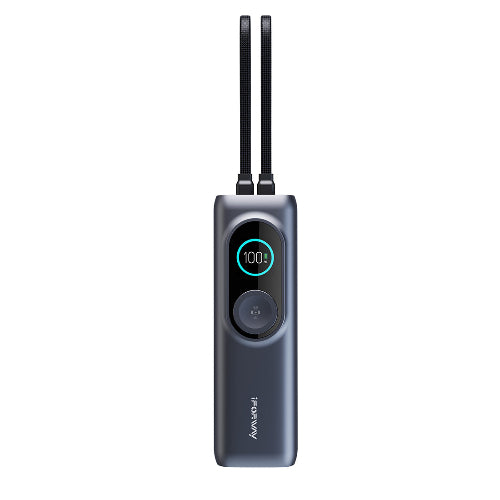
iFORWAY 25000mAh Power Bank (170W)
The Perfect Solar Companion: Store solar energy efficiently during the day. With a massive 25000mAh capacity and 170W ultra-fast output, you can power up multiple laptops and phones simultaneously at camp.
FAQ: iFORWAY 36W Portable Solar Charger
Is the iFORWAY Solar Charger good for hiking and camping?
Yes. It is specifically designed for outdoor use, including hiking, camping, backpacking trips, and emergency backup power to recharge essential gear when wall outlets are unavailable.
Can I use this solar panel to directly charge my phone?
Yes. It can charge most USB-C and USB-A devices. However, for more stable charging, especially when sunlight changes, it is often better to charge a power bank first and then charge your phone from the power bank.
Can I hang it on my backpack while walking?
Yes, you can attach it to the outside of your backpack for gradual charging while hiking. However, the best charging performance usually comes from placing the panel in direct sunlight during breaks or at camp.
Does it work on cloudy days?
It may still generate some power on cloudy days, but charging speed will be noticeably lower than in direct sunlight. Treat solar charging as a way to extend battery life rather than your only source of electricity.
Is the iFORWAY solar panel waterproof?
The panel itself is built for outdoor conditions and can handle light rain, moisture, dust, and splashes. However, the USB ports, cables, and connected devices should still be protected from heavy rain.
Ready to Upgrade Your Trail Power?
Stop worrying about dead batteries on your next multi-day trek. Discover the perfect balance of lightweight portability and reliable charging.
Shop the iFORWAY 36W Solar Charger
0 comments